September 23, 2026 · 3 min read
Loneliness in Older Adults: Small Ways to Connect
Loneliness in older adults calls for a kind conversation. Find small ways to support connection while respecting your parent’s choices.
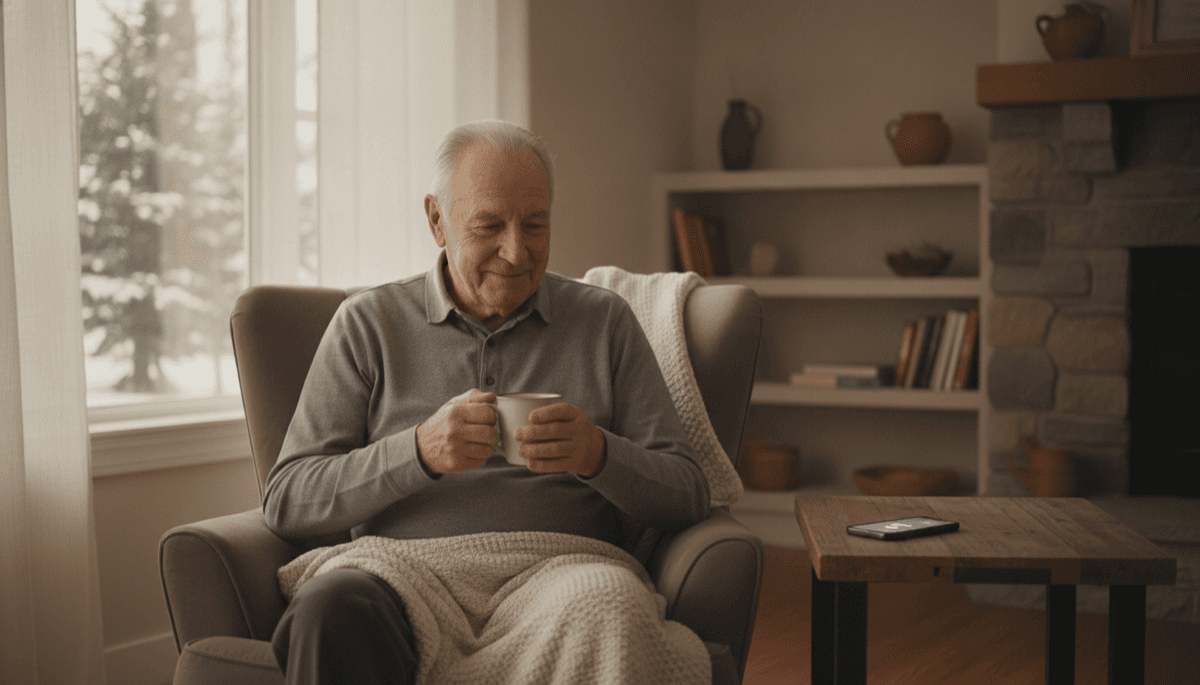
Loneliness in older adults is not something you can judge by counting visitors. Your parent may enjoy plenty of quiet time, or feel disconnected despite a busy calendar. A useful first step is to ask what kind of company they would welcome.
Loneliness in older adults starts with their experience
Loneliness is the feeling of missing the connection you want; social isolation describes having little contact with other people. [1, 3]
Ask whether your parent feels they have enough company, rather than assuming that living alone means they feel lonely.
Give them room to describe what is missing: a close friend, everyday conversation, shared interests, or something else entirely.
A large review linked loneliness and isolation with a higher chance of dying during follow-up, but did not prove cause and effect. [1]
Another study found that the link with loneliness weakened after accounting for health and other factors; the picture is complex. [3]
Ask about what makes connection difficult
Try a specific invitation: would your parent enjoy a short visit, a phone call, or a walk with someone they know?
Ask whether getting there is the difficult part, and offer a ride if transport is standing in the way.
Check whether the cost, timing, noise, or size of a group makes an otherwise appealing activity feel less comfortable.
Let your parent choose how much contact feels right; a full social calendar does not need to be the goal.
If your parent describes feeling low or struggling with daily life, offer help arranging a conversation with their healthcare provider.
Try one connection and learn from it
Research has tested approaches such as group activities, exercise, talking therapies, and technology, with mixed results for loneliness. [2]
The overall evidence was very uncertain, so no single activity can be promised to work for everyone. [2]
Pick one activity your parent already enjoys, then explore a way to share it with someone they like.
In an Alberta winter, ask whether a regular phone conversation or an indoor outing would be easier to keep up.
If movement interests them, our article on strength and balance can start a discussion about activities they might enjoy with company.
If social routines include drinking, our guide to alcohol and memory offers a separate wellness conversation to have together.
Let wellness information support a real conversation
A quieter week in an activity record cannot tell you whether your parent feels lonely; ask how the week has been.
Treat sleep or activity changes as a reason to listen, rather than a score of how socially connected your parent is.
Harmoni notices patterns in sleep and activity and offers a gentle nudge to check in; it does not measure loneliness.
Agree on what information your parent wants to share and who they would like involved in these conversations.
After trying an activity, ask whether they enjoyed it, felt welcome, and would like to do it again.
Keep the plan flexible: your parent's preferences should shape the next invitation, even if that means trying something quite different.
What this means for your family
Ask about the connection your parent wants, then help remove one practical barrier to making it happen.
Choose a small, welcome plan together and judge it by your parent's experience, rather than the number of outings.
Use a gentle wellness check-in to make room for conversation: Join the Alberta pilot.
References
1. Holt-Lunstad J, et al. Perspectives on Psychological Science. 2015;10(2):227-237. https://doi.org/10.1177/1745691614568352
2. Hoang P, et al. JAMA Network Open. 2022;5(10):e2236676. https://doi.org/10.1001/jamanetworkopen.2022.36676
3. Steptoe A, et al. Proceedings of the National Academy of Sciences. 2013;110(15):5797-5801. https://doi.org/10.1073/pnas.1219686110
This article is for informational purposes only and does not constitute medical advice. Please consult your healthcare provider with any health concerns.
Wondering if Harmoni could help your family?
We are enrolling Alberta families in a free pilot. Leave your name and email and we will be in touch.
Join the Alberta pilotDr. Sundeep Varma
Family medicine physician and founder of Harmoni.